What does a bathroom remodel cost in Lexington, compared with a budget?
Published data from This Old House puts the average Lexington-Fayette bathroom remodel at about $17,000 to $32,000. That’s a full remodel: the room comes down to the studs and everything is replaced.
Plenty of good bathroom projects cost less than that, because not every bathroom needs a gut. Smaller refreshes (paint, vanity, fixtures, flooring) often come in under $10,000. The trick is matching the budget to the right kind of project, instead of trying to squeeze a full remodel into a refresh budget.
Can you redo a bathroom for $5,000?
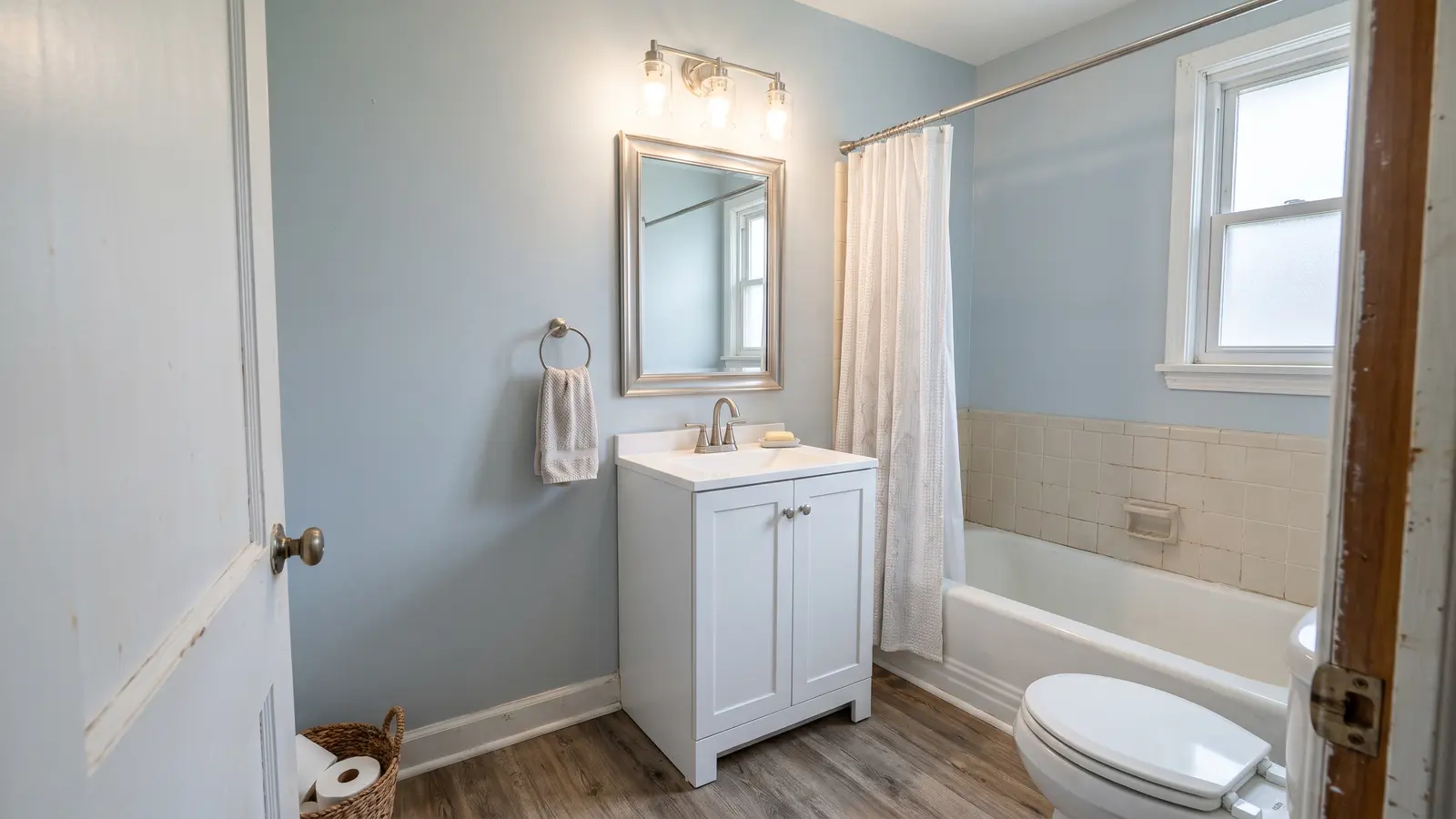
You can make it look and work noticeably better, but it’s a refresh, not a remodel. Around $5,000 in a small Lexington bath typically covers some mix of:
- A stock vanity with an attached top and sink
- A new faucet and drain
- A new toilet on the existing flange
- A mirror or medicine cabinet and a new light fixture
- Paint, new towel bars and hardware
- A properly ducted vent fan, if the old one is noisy or vents into the attic
What it won’t cover: new shower walls, tile work, a new tub or any plumbing moved to a new spot. If your tub and tile are in decent shape and you mainly dislike the vanity and lighting, this is a sensible budget.
Is $10,000 enough for a bathroom remodel?
For many Lexington hall baths, yes, if you stay disciplined about the layout. A $10,000 project typically looks like this:
- Remove the old tub-shower walls and install an acrylic or solid-surface surround, or a new tub with a surround. Bathtub replacement runs $3,500 to $9,000 on its own.
- New vanity, toilet and faucet in the same spots
- New floor, such as porcelain tile or luxury vinyl
- New lighting and vent fan
A typical target for this budget is the postwar ranch bath in Southland or Gardenside, where a 1970s fiberglass unit or worn tile is the main eyesore. Keep the tub where it is and the drain where it is, and $10,000 can deliver a bathroom that feels new.
Where it falls short: a fully tiled shower with glass, a curbless entry, or relocating the toilet.
What does $20,000 get you?
At $20,000, you’re in full-remodel territory for most Lexington bathrooms. That usually allows:
- Taking the room to the studs and replacing supply lines and drains as needed
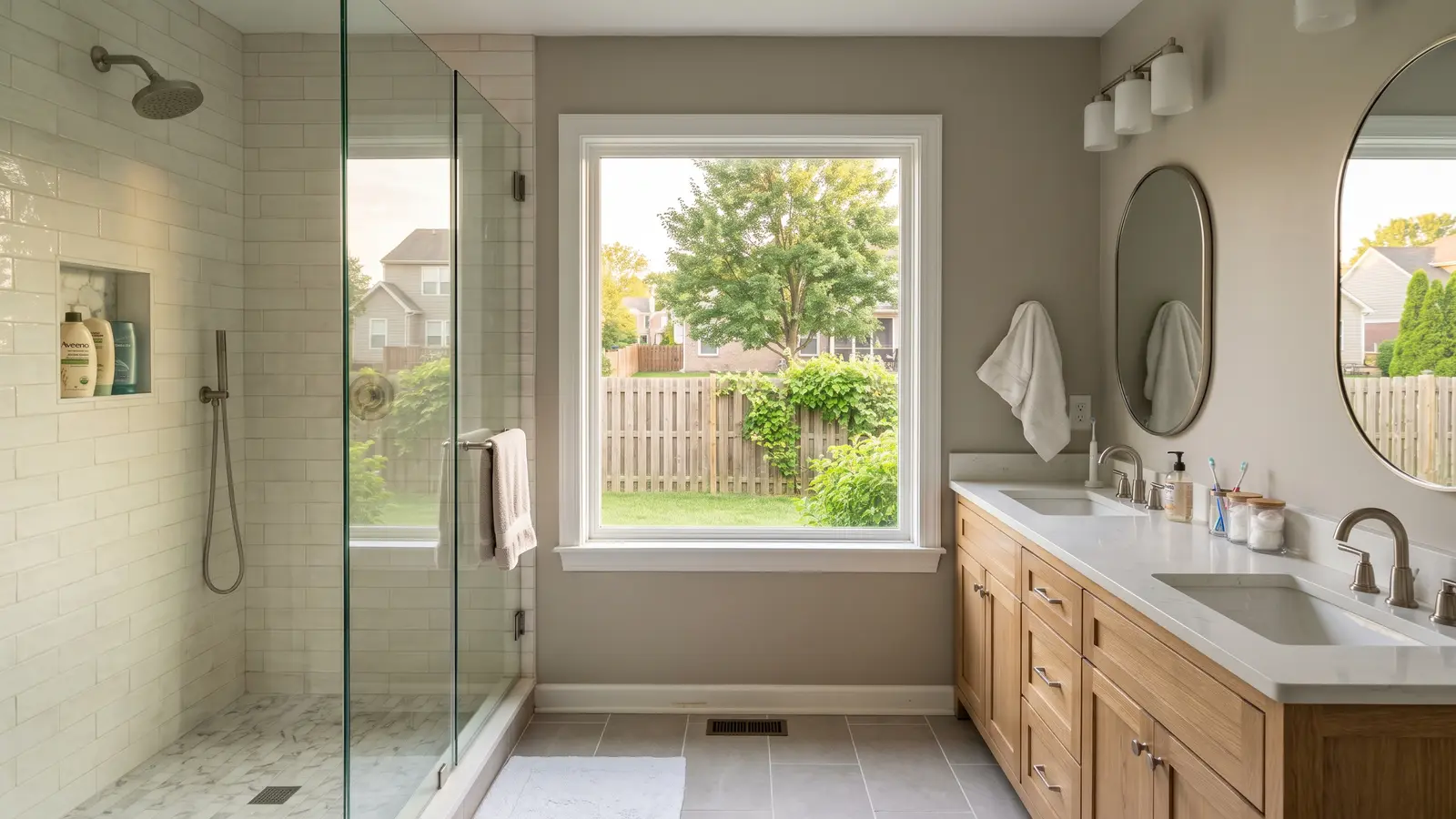
- A tile shower, which typically runs $9,000 to $20,000 on its own, or a quality panel system plus upgraded finishes elsewhere
- A semi-custom vanity or a longer stock vanity
- Tile floors, new lighting and a ducted fan
In a 1930s Chevy Chase or Ashland Park bath, part of that budget may go to things you won’t see: galvanized pipe, a cracked cast-iron drain or a soft subfloor. That’s money well spent, but plan for it.
What is the 30% rule in remodeling?
It’s a rule of thumb, not a regulation, and you’ll hear it used in more than one way. The most common version says don’t spend more than about 30% of your home’s value on renovations, because beyond that you’re unlikely to get the money back when you sell, and you risk over-improving for the street.
For a single bathroom, the useful takeaway is simpler. Size the project to the house. A modest ranch in Cardinal Valley doesn’t need a luxury primary-suite bathroom, and a large Idle Hour home probably shouldn’t get the cheapest fixtures in the catalog.
Some people also use “30%” loosely to describe how much extra to set aside for surprises. We’d say any older home deserves a real contingency, and our quotes call it out on its own line.
Where can you save without regretting it?
- Keep the layout. Moving plumbing is the most expensive single decision in most bathrooms.
- Choose panels over tile in the shower. Acrylic or solid-surface walls cost less to install and have fewer grout lines to clean. Lexington’s hard water leaves mineral film on grout, so fewer lines also means less scrubbing. We compare them in acrylic vs. tile showers.
- Use a stock vanity. Spend the difference on the faucet and the shower valve, which you touch every day.
- Reglaze a sound tub. If a cast-iron tub is in good shape, refinishing can be cheaper than replacing it.
- Decide everything up front. Mid-job changes cost more than almost any finish upgrade.
Where does cutting corners backfire?
- Waterproofing. It’s hidden behind tile, so it’s tempting to skimp. A shower that leaks into the subfloor costs far more than doing it right.
- Old supply lines. Leaving corroded galvanized pipe inside a freshly closed wall means opening that wall later.
- Ventilation. A cheap fan, or one that dumps moist air into the attic, invites mold and peeling paint.
- Glass with no coating. With Central Kentucky’s mineral-heavy water, uncoated glass spots quickly. A protective coating is a small upgrade.
Should you refinish or replace the tub?
Refinishing (reglazing) makes sense when the tub itself is solid and only the surface is worn or the color is dated. That’s often true of the heavy cast-iron tubs in 1920s to 1940s Lexington homes, which are expensive and labor-intensive to remove. A refinished surface isn’t as durable as the original, so it suits a guest or kids’ bath better than a daily soak.
Replace the tub if it’s cracked, leaks, has rust coming through, or if the walls around it are soft or failing. In that case refinishing just covers up the problem, and you’ll be paying for the job twice. A quick look during the quote visit usually tells us which way to go, and we’ll price both options if it’s close.
Is a liner system cheaper than a remodel?
Acrylic liner systems from companies such as Bath Fitter or Re-Bath generally cost less than tile. Whether they’re the right call depends on what’s behind the old walls and how long you plan to stay. We cover the trade-offs in Bath Fitter vs. a full remodel.
How do you build a budget that holds?
Start with the number you’re comfortable with, then let us show you what fits. We visit, measure and give you a free written, itemized quote, so you can see what each choice adds and move items in or out. For the full cost picture, read the Lexington bathroom remodel cost guide. Call (859) 710-5815 or request a free quote.