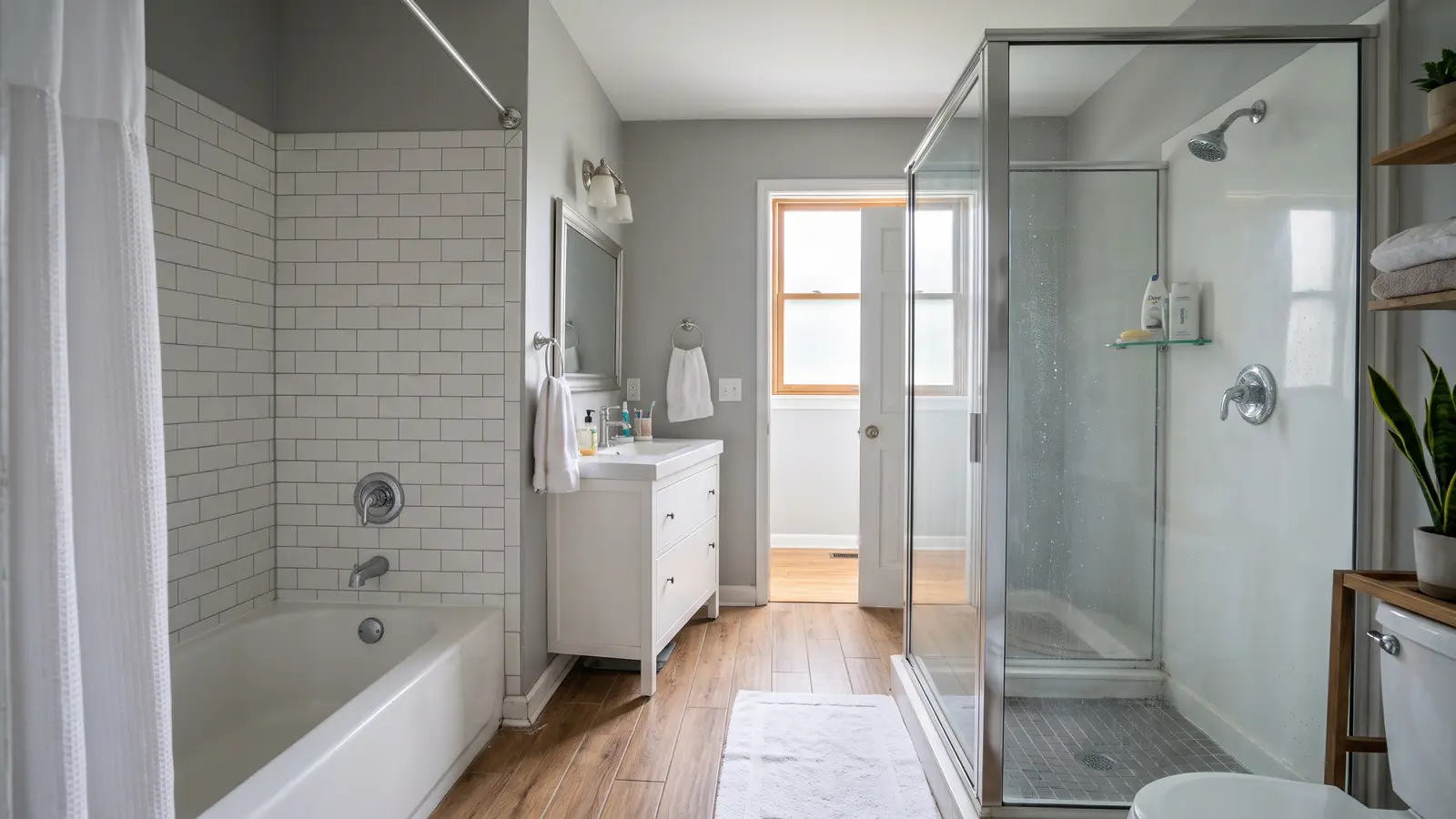
Walk-in shower or bathtub: which belongs in your Lexington bath?
Tub or shower is a question we hear in almost every Lexington house we visit, from Cardinal Valley ranches to Masterson Station two-stories. The right answer depends less on trends and more on who uses the room, how many bathrooms you have and how long you plan to stay. Here's how the two compare.
Get a Free Quote
Fast. Easy. No obligation.
Quick answer
Converting a tub to a walk-in shower costs about $6,000–$14,000 in Lexington and usually takes about one to two weeks. Replacing a tub with a new one runs $3,500–$9,000. A shower is easier to step into and clean, but most homes should keep at least one tub for kids and future buyers.
Option A
Walk-In Shower
A shower with a low curb or no curb, a glass door or fixed panel, and room for a bench, grab bars and a handheld head. Often built in the old tub space.
Option B
Bathtub
A standard alcove tub with a shower above it, or a freestanding soaking tub. Handy for bathing children, soaking and households that want both options.
| Walk-In Shower | Bathtub | |
|---|---|---|
| Cost in Lexington | Tub-to-shower conversion about $6,000–$14,000; custom walk-in shower about $8,000–$18,000 | Bathtub replacement about $3,500–$9,000 |
| Step-in height | A low curb or none | Climb over the tub wall |
| Fall risk | Lower; easy to add a seat, grab bars and a handheld head | Higher, especially stepping out onto a wet floor |
| Cleaning | Glass and walls; hard water spots on the glass | Tub basin, surround and curtain or doors |
| Kids and pets | Workable, but awkward for small children | Much easier |
| Look and feel | Open and modern; small rooms feel larger | Traditional; a soaking tub can anchor a primary bath |
| Resale | Well liked in primary baths | Many buyers want at least one tub in the house |
| Good fit for | Primary baths, adults, aging in place | The only full bath in a family home, hall baths |
What are the disadvantages of a walk-in shower?
A few, and they're worth knowing before you remove a tub. You lose the ability to soak and to bathe small children or a dog easily. Glass doors and panels show mineral spots quickly with Lexington's hard water, so plan on a squeegee or a glass coating. A doorless design can let cold air in, and a curbless shower needs the floor sloped correctly or water ends up on the bathroom floor.
Cost is the other surprise. Many people assume a shower is cheaper than a tub. In practice, converting a tub to a shower usually costs more than swapping in a new tub, because of the glass, the wall finish and the new valve and drain work.
Should you remove the only tub in the house?
Think carefully before you do. Agents commonly advise keeping at least one bathtub in a home, because buyers with young children often won't consider a house without one. That matters most in three-bedroom family homes, such as many of the ranches in Southland and Gardenside that have one full bath.
If your house has two full bathrooms, the usual plan is easy: turn the primary-bath tub into a walk-in shower and keep the tub in the hall bath. Many owners in Hamburg and Beaumont do exactly that, and often swap a garden tub nobody uses for a larger shower. If you live in a condo, a one- or two-bedroom home, or plan to stay for many years, the resale concern carries less weight.
How much does each option cost?
In the Lexington area, a straight tub-to-shower conversion in the same footprint typically runs $6,000–$14,000. A larger custom walk-in shower with tile, glass and a bench is closer to $8,000–$18,000. If you decide to keep a tub, a bathtub replacement usually costs $3,500–$9,000.
What moves those numbers most: panels versus tile on the walls, the type of glass, whether the drain has to move, and what we find when the old tub comes out. In 1920s to 1940s homes in Chevy Chase and Ashland Park, a cast-iron tub and old drain lines can add work. The tub-to-shower conversion cost guide breaks it down line by line.
Do you need a permit to convert a bathtub to a shower?
Often, yes. In Kentucky, plumbing permits are issued by the state Department of Housing, Buildings and Construction, and moving or adding a fixture, drain or waste opening requires one. A tub-to-shower swap usually changes the drain location or the fixture itself, so a permit is commonly needed. A new tub dropped into the same spot with no drain move usually isn't. We confirm the permit path for each job and pull what's needed. More detail is in our permit guide.
Is there a middle ground?
Yes. If you need to keep a tub but stepping over it is getting harder, consider a lower-profile tub, a slip-resistant floor, a grab bar on the back wall and a handheld shower on a slide bar. That keeps the bathing option for kids and resale while making the daily shower safer. For bigger mobility needs, see our accessible bathroom work.
The verdict
Choose a walk-in shower for a primary bath used mostly by adults, any bath where the tub wall is becoming a hazard, or a home that has another tub elsewhere.
Keep a bathtub if it's the only full bath in a family-sized house, you bathe young kids or pets, or you expect to sell to families soon. If you're torn, call us or set up a free visit and we'll give you written prices for both so you can compare.
Related services
Questions people ask
Does Medicare pay for a tub-to-shower conversion?
Original Medicare generally doesn't cover it. Some Medicare Advantage plans, Medicaid waiver programs or VA programs may help, so check with your plan directly.
Will a walk-in shower fit in my tub space?
Nearly always. A standard 60-inch alcove tub becomes a roomy shower about 60 by 30 or 32 inches, and the drain can often be reused or shifted a little.
Is a walk-in shower cheaper than a new tub?
Usually not. A new tub runs about $3,500–$9,000, while a conversion is about $6,000–$14,000, mostly because of glass and wall finishes.
Does removing a tub hurt resale in Lexington?
It can if it's the only tub in a family-sized home. Keeping one tub, often in the hall bath, protects resale.
How long does a tub-to-shower conversion take?
Usually about one to two weeks of work, depending on panels or tile. See how long a bathroom remodel takes.
Ready for a Bathroom That Works?
A leaky, dated or hard-to-use bathroom doesn't get cheaper to fix. Get a free written quote and a plan you can hold us to.
- Calls answered 24/7
- Free, written estimates
- Lexington & nearby