What does it cost to turn a tub into a shower in Lexington?
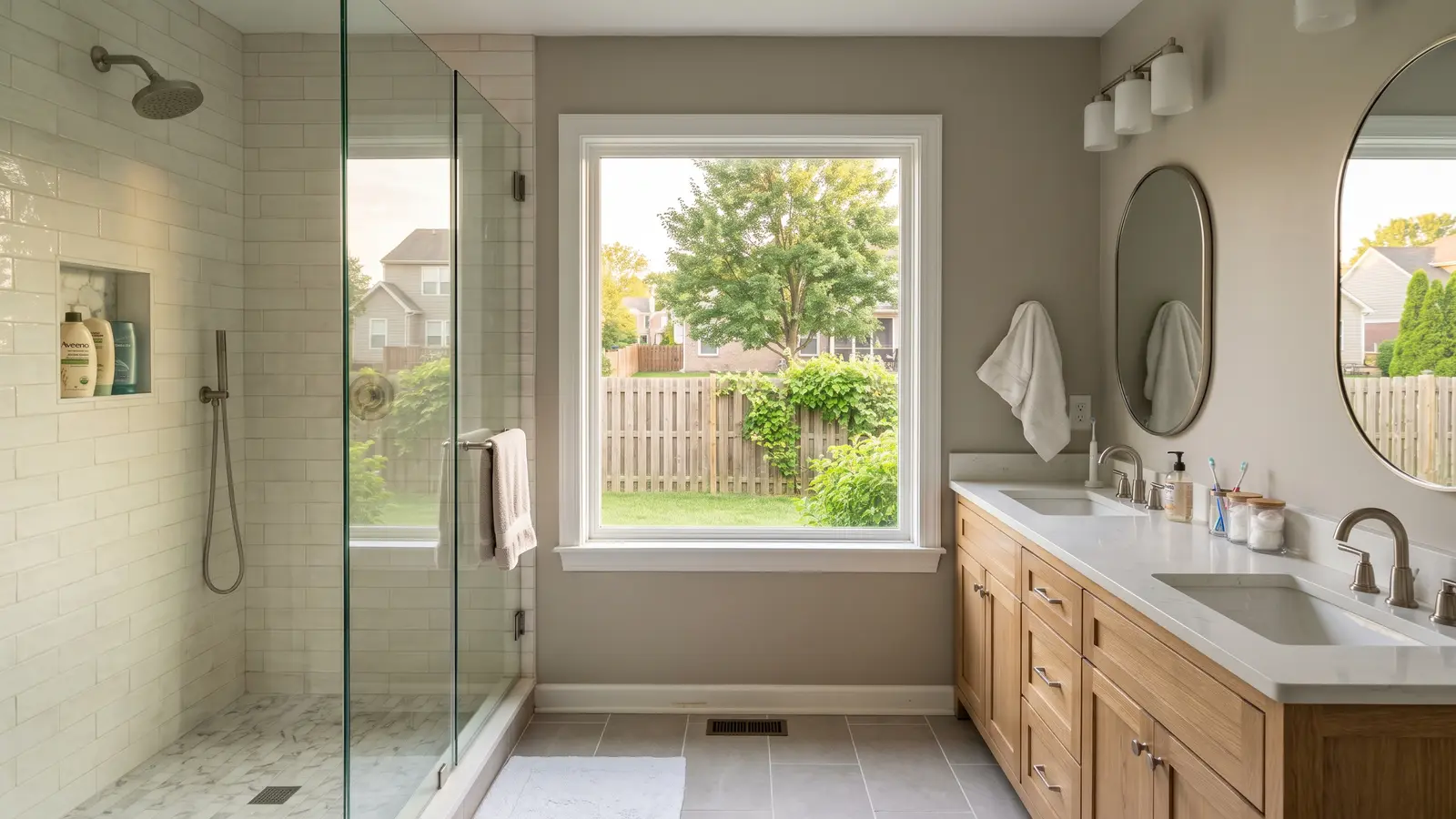
The typical range for a tub-to-shower conversion around Lexington is $6,000 to $14,000, including labor and materials. That covers removing the tub and its surround, adjusting the plumbing, installing a shower base or tiled floor, building the walls, and adding a valve, trim and a door or glass panel.
Where your project lands in that range comes down to three questions:
- Does the drain stay or move?
- Panels or tile on the walls?
- A low curb or no curb at all?
What does each version of a conversion cost?
| Conversion type | Where it usually lands | What’s included |
|---|---|---|
| Panel shower, same footprint | Low end of the range | Acrylic or solid-surface base and walls, stock door |
| Upgraded panel shower | Middle of the range | Larger base, built-in shelves, grab bars, upgraded glass |
| Tiled shower, low curb | Upper middle | Waterproofed tile walls, tile or solid base, glass door |
| Tiled curbless shower | High end, near $14,000 | Recessed floor, linear drain, frameless glass |
If you want a bigger, fully custom shower that goes beyond the old tub’s footprint, it’s closer to a walk-in shower project, which runs $8,000 to $18,000.
What raises or lowers the price?
Drain location. A tub drain sits at one end of the alcove. Many shower bases want the drain nearer the center. Moving it means opening the floor, more plumbing labor and a state plumbing permit. Bases made to line up with an existing tub drain can avoid that.
Wall material. Acrylic and solid-surface panels install faster than tile and have fewer grout lines. Tile gives you more design choices but takes more labor. Our acrylic vs. tile shower comparison goes through the trade-offs.
Threshold. A low-curb base is the most economical. A curbless entry usually means lowering the subfloor, which adds framing and waterproofing work.
Glass. A stock sliding or hinged door costs less than frameless glass, which is measured after the walls are finished.
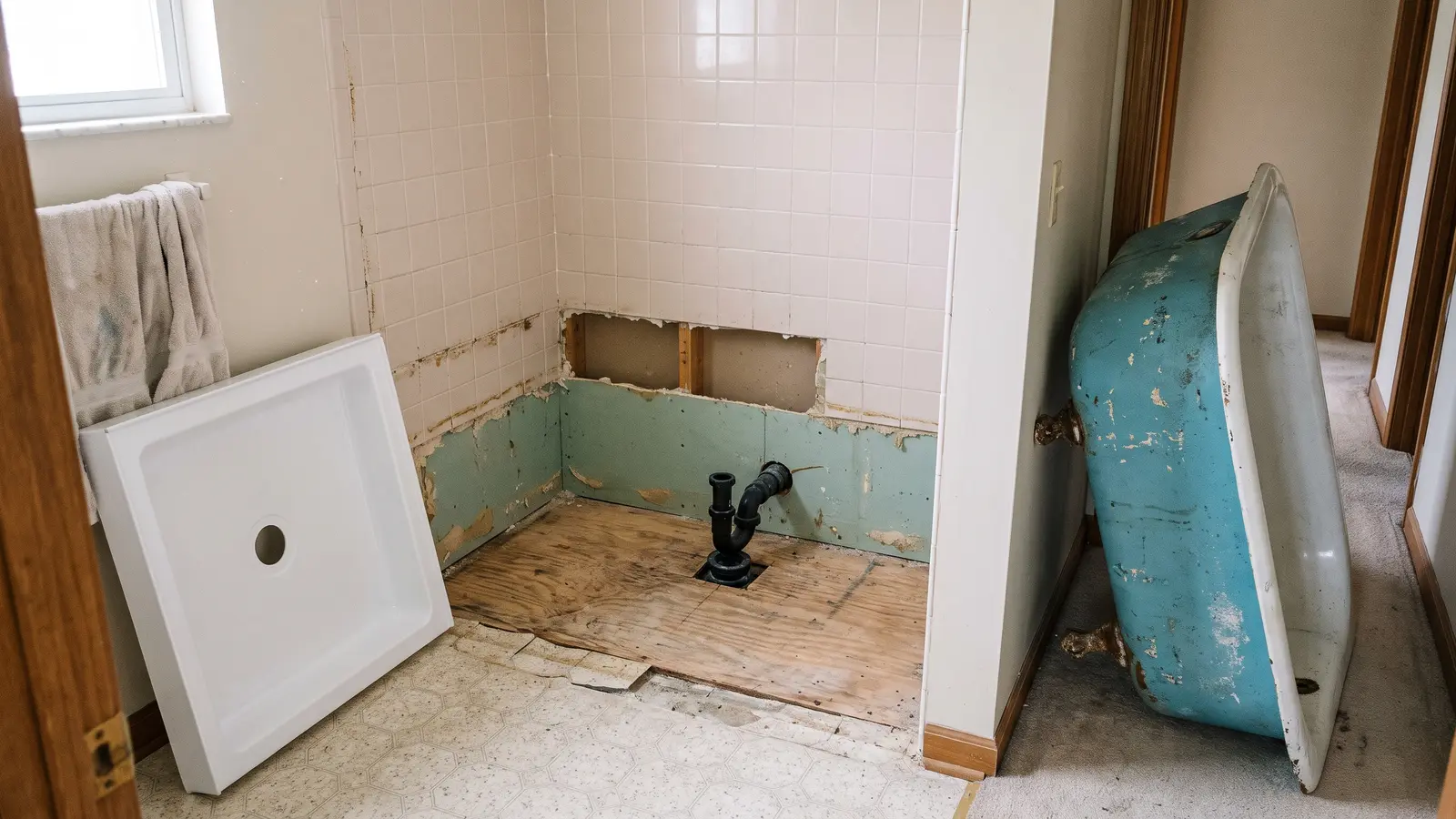
What’s behind the old tub. In a 1930s Bell Court or Kenwick home, pulling a cast-iron tub can reveal cracked drain fittings or soft subfloor. In a 1990s Hamburg or Beaumont house, the fiberglass unit usually comes out cleanly.
How do conversions look in different Lexington homes?
Postwar ranches in Southland, Gardenside and Tates Creek. These usually have a 5-foot tub-shower combo with 1960s to 1980s tile or a fiberglass unit. A same-footprint panel shower with a low curb is the most common job, and it often stays near the lower part of the range.
Older homes in Chevy Chase and Ashland Park. Often the only full bath in the house. Removing a heavy cast-iron tub takes more labor, and plaster walls take longer to remove. If you’re converting the only tub in the house, think about resale (covered below).
Newer homes in Masterson Station, Palomar and Andover Forest. The conversion is often in the primary bath, where a garden tub nobody uses sits next to a small stall shower. Removing the tub and building one larger shower is a common upgrade, and it frequently moves into walk-in shower pricing.
Does Medicare pay for a tub-to-shower conversion?
We want to be straight about this, because a lot of homeowners hear otherwise. Original Medicare generally doesn’t cover a tub-to-shower conversion. It’s usually treated as a home modification rather than medical equipment.
That said, help may exist elsewhere:
- Some Medicare Advantage plans include benefits for home safety items or modifications.
- Medicaid waiver programs may help eligible people with home accessibility changes.
- VA programs may help eligible veterans adapt a home.
Rules and eligibility vary, so check your specific plan or program before you sign anything. If accessibility is the main goal, our accessible bathrooms page covers features such as low thresholds, grab bar blocking and seating.
Do you need a permit for a tub-to-shower conversion in Lexington?
Often. Kentucky plumbing permits are issued by the state’s Department of Housing, Buildings and Construction (Division of Plumbing), and moving or adding a drain, fixture or waste opening needs one. Since most conversions shift the drain, most need a permit. If the drain stays exactly where it is, the job may not. We confirm the permit path for every project and pull what’s needed. Details are in our Lexington permit guide.
Will you regret losing the tub?
It depends on the house. If you have another bathroom with a tub, converting the primary or hall bath to a shower is generally seen as an improvement, and it’s easier to step into as you get older. If it’s the only tub in the house, some buyers with young children may pass on it. That’s worth weighing, especially in a one-bath home. We go deeper in walk-in shower vs. bathtub.
Is acrylic or fiberglass better for a new shower?
Acrylic is generally the stronger choice for a conversion. It’s a solid sheet with color all the way through, so small scratches are less visible, and it holds its gloss longer. Fiberglass is lighter and costs less up front, but its gel coat can dull, crack or fade over the years. If you’re replacing an old fiberglass unit from a 1990s or 2000s house, you’ve probably seen that first-hand. Solid-surface panels are another option, with a stone-like look and no grout lines. Any of the three costs less to install than tile, which is why panel conversions sit at the lower end of the price range. The right pick depends on how the shower will be used and how long you plan to stay in the house.
How does hard water affect the new shower?
Lexington’s limestone water leaves mineral spots on glass and builds up on fixtures. With a new shower, consider coated glass, simple fixture finishes that are easy to wipe, and either panel walls or a stain-resistant grout. A squeegee after each shower helps a lot.
How long does a conversion take?
Most conversions take about 3 to 7 working days on site, depending on the drain work and wall material. Custom glass may be installed a little later, after the walls are finished. Our timeline guide lays out the stages.
How do you get a firm price?
We visit, check the existing drain and subfloor, measure the alcove, and give you a free written, itemized quote. Call (859) 710-5815 or request a free quote to see what your tub-to-shower conversion would cost.