Why are there two permit offices for one bathroom?
Most homeowners expect one office to handle everything. In Lexington, bathroom work can touch two separate offices, and which one you need depends on what’s changing.
- Plumbing permits come from the state. Kentucky’s Department of Housing, Buildings and Construction (its Division of Plumbing) issues them, not the city.
- Building permits come from the city-county government. The LFUCG Division of Building Inspection handles structural work.
A simple bathroom update may need neither. A large remodel that moves a shower and takes out a wall may need both. Sorting that out is part of planning the job, and it’s something we do for every quote.
When does a bathroom remodel need a plumbing permit?
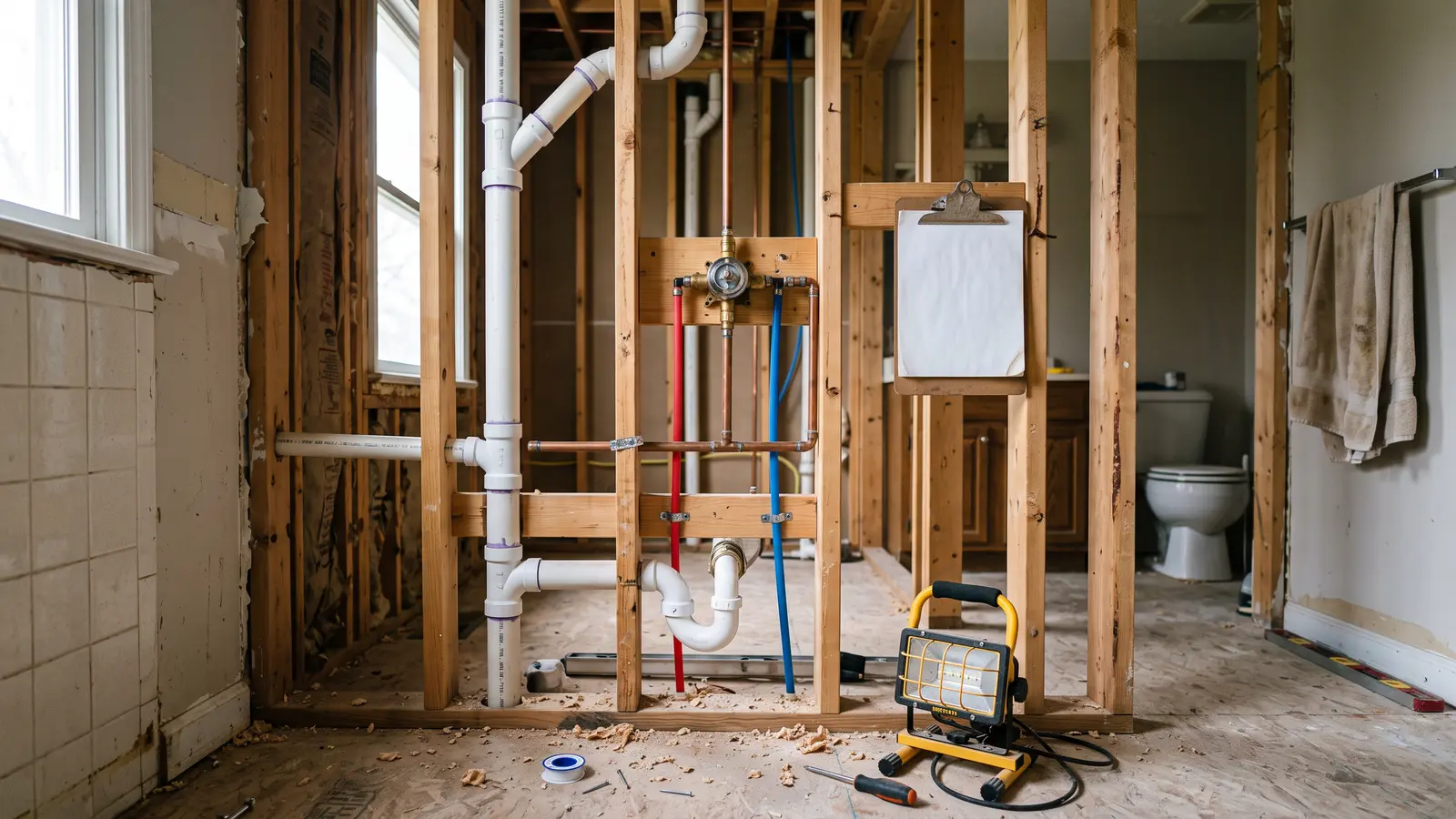
Kentucky’s plumbing rules draw a clear line. Moving or adding a fixture, drain or waste opening needs a plumbing permit. Repairing leaks or valves doesn’t.
In practice, that means these jobs usually need one:
- Moving a toilet to the other side of the room
- Shifting a shower drain to the center of a new shower floor
- Adding a second sink to a vanity wall
- Putting a shower where there wasn’t one before
- Relocating a tub to open up floor space
And these usually don’t:
- Fixing a dripping faucet or a leaking shower valve
- Replacing a toilet on the same flange
- Swapping a sink in place on the same drain
On a hired job, the state permit is pulled by a plumber who holds a Kentucky plumbing license, and it goes to the state, not the city. Kentucky does let homeowners permit plumbing work they personally do in the home they live in, but that option ends once someone else is doing the work.
When does a bathroom remodel need a building permit?
Building permits in Lexington come from the LFUCG Division of Building Inspection.
- Address: 101 E. Vine St., Lexington, KY
- Phone: (859) 258-3770
- Applications: through the LFUCG Citizen Portal
Per the division’s residential remodeling guide, structural work needs a building permit. In a bathroom, that most often means:
- Moving or removing a wall, for example to borrow space from a closet or hallway
- Adding a window, such as a new window over a tub
- Adding a door, such as a second entrance from a bedroom
If your project involves any of these, plan on a building permit in addition to whatever plumbing work is involved.
Which bathroom jobs usually need no permit?
Like-for-like work is the big category that typically doesn’t need a permit. The idea is that nothing is being moved, added or opened up structurally.
| Job | Permit usually needed? | Which office |
|---|---|---|
| New vanity in the same spot | Usually no | None |
| Retiling a floor or shower in place | Usually no | None |
| New tub in the same spot, drain not moved | Usually no | None |
| Repairing a leak or a valve | No | None |
| Moving a toilet, shower or tub drain | Yes | State Division of Plumbing |
| Adding a sink, shower or other fixture | Yes | State Division of Plumbing |
| Moving or removing a wall | Yes | LFUCG Building Inspection |
| Adding a window or door | Yes | LFUCG Building Inspection |
“Usually” matters in that table. The details of a specific job decide it, which is why we confirm the permit path for each project rather than guessing.
Do you need a permit to turn a tub into a shower?
Often, yes. When a 5-foot tub becomes a walk-in shower, the drain usually moves, because a tub drain sits at one end and a shower drain tends to sit closer to the middle of the base. Moving that drain is the kind of change that needs a state plumbing permit.
Some conversions keep the drain in its original spot with a shower base designed for it. In that case, the job can be closer to a like-for-like swap. We look at the existing drain during the quote visit and tell you which situation you’re in. If you’re comparing prices, see tub-to-shower conversion cost.
How do permits play out in different Lexington homes?
An Ashland Park or Chevy Chase bungalow. These houses often have one full bath, and owners sometimes want to borrow closet space to make the room bigger. Moving that wall brings in an LFUCG building permit, and relocating the tub or toilet adds a state plumbing permit.
A Tates Creek or Gardenside ranch. A common project is pulling out the original tub-shower combo and putting in a walk-in shower. If the drain moves, that’s the state plumbing permit. Walls usually stay where they are.
A Masterson Station or Andover Forest primary bath. Taking out the garden tub and extending the shower usually shifts drains, so plan on a plumbing permit. Adding a window for light would add a building permit.
A cosmetic refresh anywhere. A new vanity, toilet on the same flange, new floor tile and paint typically need no permit at all.
What should you ask before work starts?
Whoever does your remodel, a few questions up front make the permit side clear:
- Does this job move or add a fixture, drain or waste opening? If yes, it needs a state plumbing permit.
- Does it change a wall, window or door? If yes, it needs an LFUCG building permit.
- Who is pulling each permit? You should know the name on the plumbing permit.
- Is the permit work shown on the quote? It should be its own line, not buried in a total.
Clear answers to these four questions tell you most of what you need to know.
Who handles the permit paperwork?
We do. For each job, we confirm which permits apply and pull what’s needed, with the state plumbing permit going through a plumber who holds a Kentucky plumbing license. Permit work is part of the itemized quote, so you can see it on its own line.
We can’t quote permit fees or tell you how long approval will take, because those depend on the office and the scope. For the most current requirements, the LFUCG Division of Building Inspection and the state Division of Plumbing are the authorities.
Where does permitting fit in the schedule?
Permits get sorted out before demolition, alongside ordering fixtures and tile. If you’re mapping out your timeline, our remodel timeline guide shows how the stages line up, and our Lexington cost guide covers how layout changes affect the price.
Want to know what your project needs? Call (859) 710-5815 or request a free quote. We’ll look at the room and tell you which permits apply before any work starts.